Paris is not burning
Australian comedian Jim Jefferies has this routine about humanity being on a train, with scientists at the helm driving the locomotive. Once in a while, they wonder if they shouldn’t uncouple it from the other cars in order to drive faster. That is a real temptation, although a dangerous one.
The situation in France these days is one that could lead smart people to anger, even though that is not the best way forward. Let me rewind.
This past Saturday, massive demonstrations took place across major French cities to protest against the current plight of the youth, which feels stuck between worsening qualify of life, a grim job market and, above all, the notion that the situation is only going to deteriorate. The cherry on this particular cake is Parcoursup, a public website designed to match French high school graduates with university seats — which is not doing a great job at that. An intricate topic in and of itself, which I don’t have enough time to get into here if I want you to keep reading.
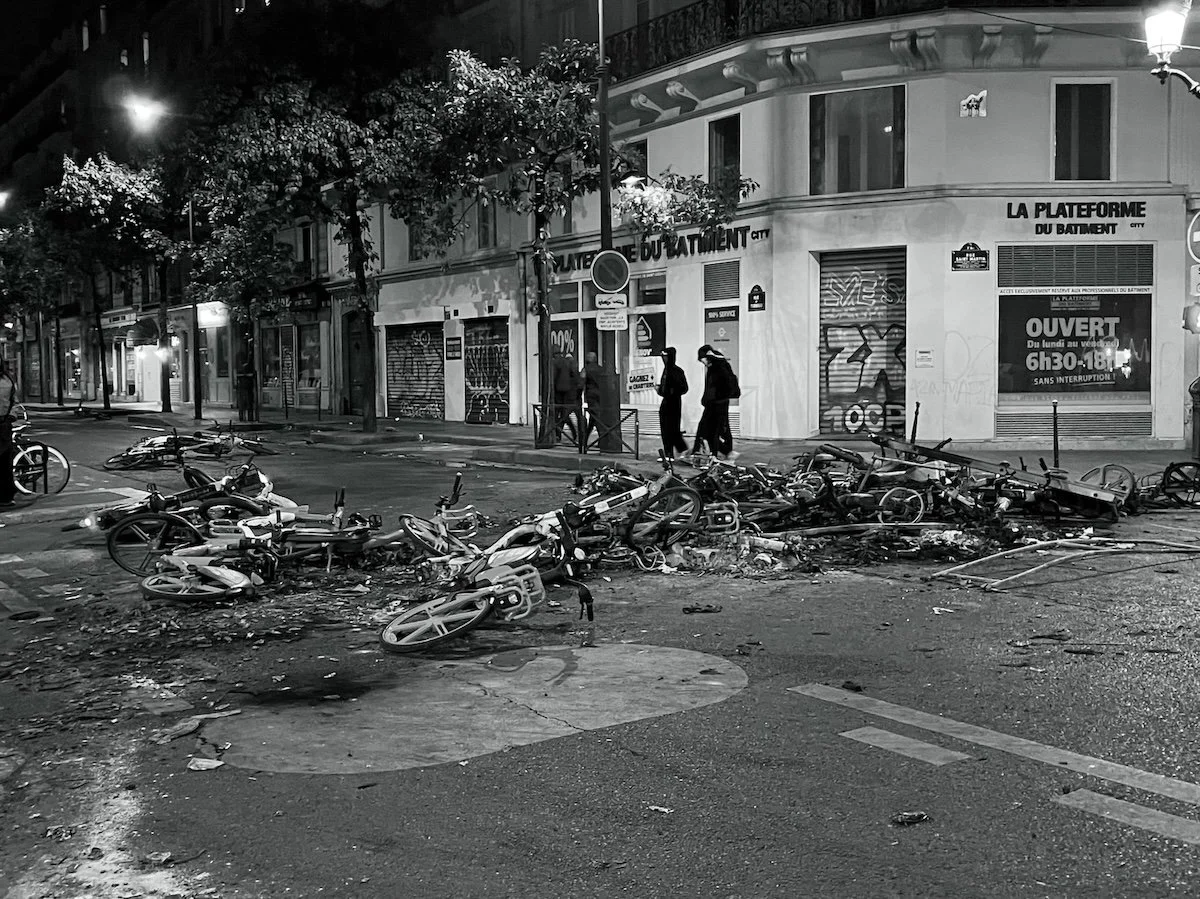
Back to Saturday: while the point of these demonstrations was about the youth expressing its grievances, what ultimately came out of them was a lot of chaos and destruction. We saw bikes and bins set on fire, shops ransacked and looted and police forces charging demonstrators with heavy clashes throughout the day — and night. What is important to specify here, however, is that young demonstrators were overwhelmingly peaceful while small, organized groups did most of the destroying and looting. Even though police were not always seen confronting them, in no small part because they were harder to get than teenagers with signs over their heads.
The result was significant destruction, many arrests and shocked individuals across the board. What came next is the most important though: many elected officials quickly rose to denounce the violence while largely ignoring the peaceful nature of these demonstrations — and the validity of their underlying claims. President Macron himself made a speech on Sunday night accusing “far left” and “delinquent” groups (in that order) of being responsible for the violence that had unfolded. While there clearly was violence, a) it was effectively due to a minority of people rather than the larger groups of students protesting peacefully b) the link between violence and the far left is not as direct as Macron made it seem.
I feel the need to note that the destructions we saw this weekend should never happen. This is gratuitous vandalism that will not amount to anything good for anyone: many of the thieves will be arrested, destroyed shops and their owners now have to regroup, insurance companies will have to pay millions (perhaps helped by the government, meaning us all) while there are far more critical causes to focus on. This is quite simply wasteful, in a world of limited resources and threats to our ecosystem.
Back on topic: blaming the far left is where it actually gets sticky. The framing of these events clearly reflects the polarized picture current French officials are pushing forth. One in which the far left, associated with the La France Insoumise (LFI) party, is declared the main enemy to the rest of society. One in which, by association, “foreigners” are considered the main issue: LFI has gradually become the party of the immigrant minority in the widest sense — second or third generation descendants of migrants from former colonies included, many of whom have been systematically left out of the meritocratic system through under-financed schools and poorly managed neighborhoods. In other words, LFI and its immigrant supporters are the ones breaking the system, looting shops, burning bins. Claims that are both demonstrably wrong — and viciously dangerous.
Why?
Because LFI is not the real enemy — the far-right Rassemblement National (RN) is. First off, the latter stands as the largest party in the country with a near-assured spot in the second round of next year’s presidential election. Meanwhile, LFI has half as many representatives in French congress, and far fewer chances of having its leader elected (another topic for another post). Against RN’s Marine Le Pen who, lest we forget, got convicted twice for embezzling millions in public funds. Against a party founded by (literal) Nazis, whose core message is to shut down frontiers, get rid of immigrants and return to a largely mythologized past.
As for the “foreigner” threat claim, it is sadly the most obvious trope of the far right. The notion that the enemy is the “other”. A notion that once targeted the Jewish community (and still does); a notion that once targeted the Italian, Spanish, Greek communities; a notion that now largely targets the Arabic and Muslim communities. While the real factor at play in last weekend’s violence has nothing to do with race, but rather with a sinking feeling of disenfranchisement, born out of generations of neglect.
Let me be clear: I thoroughly dislike LFI and its leader, the populist Jean-Luc Mélenchon who once opposed the European constitution referendum and refused to call for a vote in favor of Emmanuel Macron against the very same Marine Le Pen — twice. The party’s program is largely unrealistic (where would the money be coming from?) and at times plain wrong: getting rid of the nuclear program for one. But it is in no way as utterly dangerous and morally corrupt as what RN stands for. Not to mention actually corrupt.
I can’t help but feel history repeating itself, with 1920’s Germany obsessed with the communist threat, unable to see the much greater danger of fascism. I can’t help but feel the guilty opportunism of smart people opting to prop up a so-called far-left threat rather than point to the much more significant far-right danger — because they simply have no answer. I can’t help but feel that we are edging one step closer to a far-right government in the country of human rights.
This is where my ambivalence comes from: on the one hand, I am increasingly angered by the sheer irresponsibility of my elected officials in the face of overt fascist threats. On the other, I remain hopeful about humanity’s ability to face such threats and somehow come out the other side. I would simply prefer so very much not to have to go through this.
But the cars are attached to the locomotive…